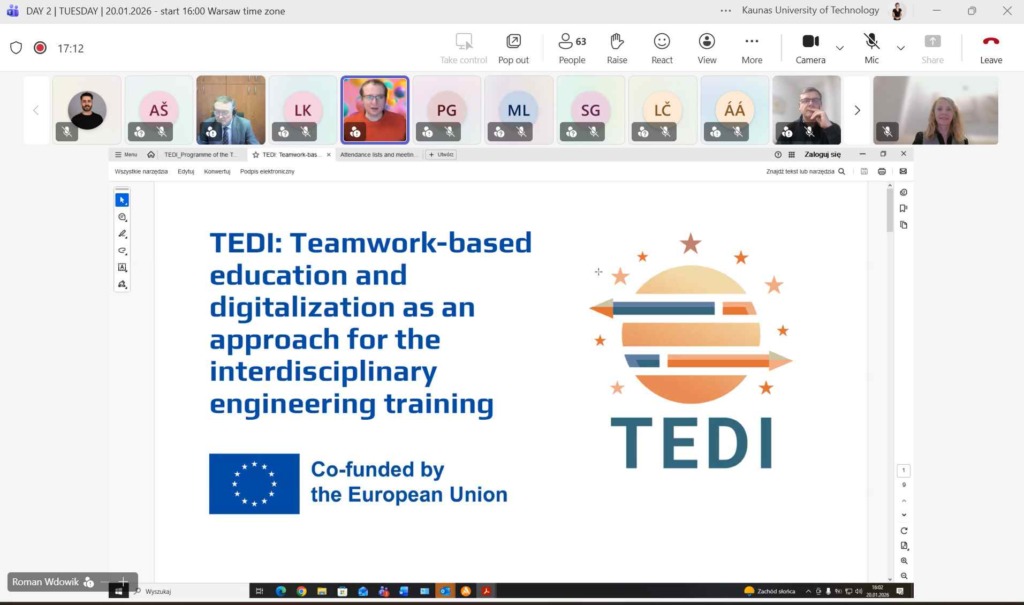
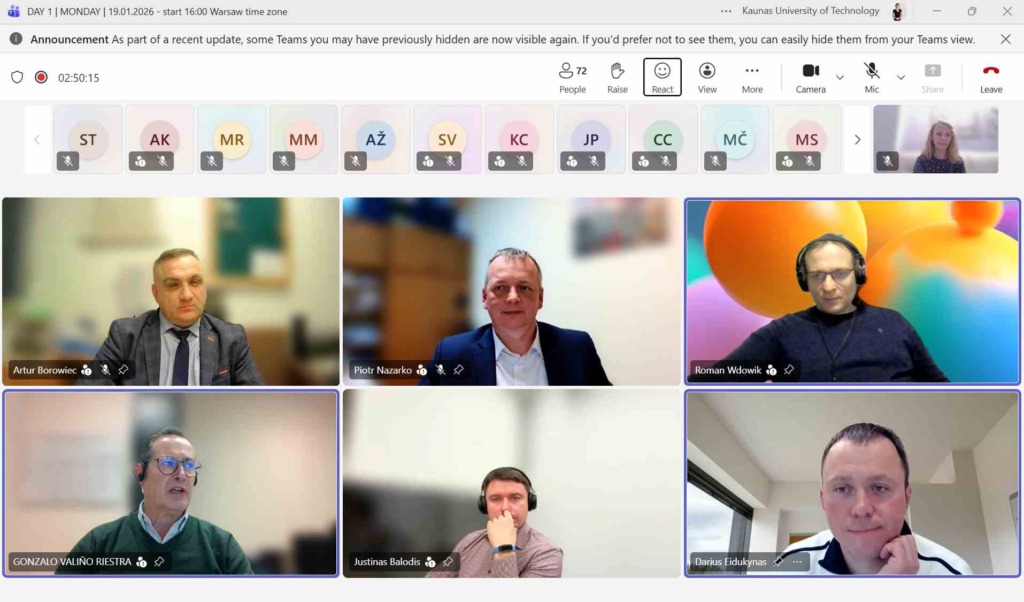
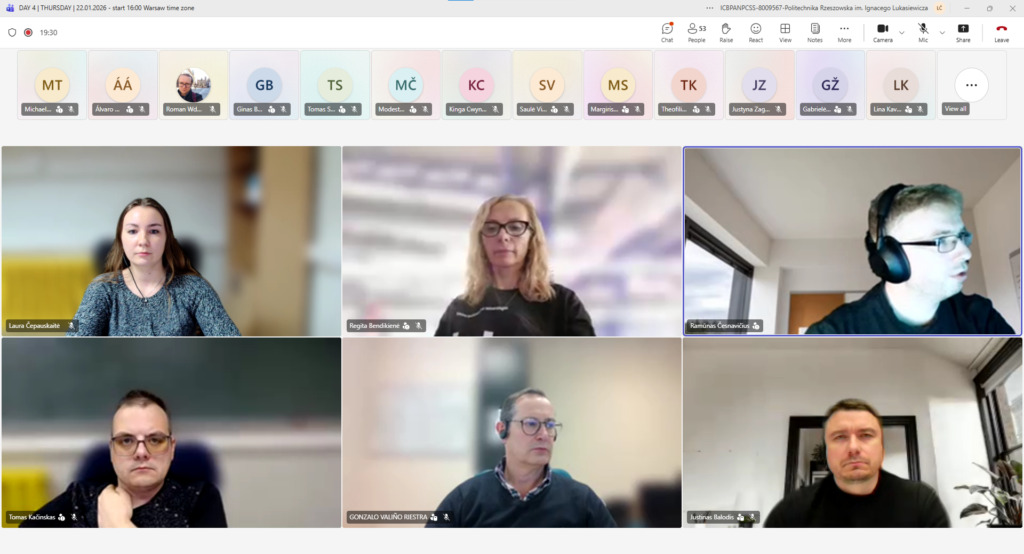
Successful completion of TEDI pilot training “Interdisciplinary training on the application of software tools in modern product development processes.” This was an intensive distance learning program designed to strengthen students’ digital and engineering competencies.
The training was implemented under the Erasmus+ funded project (Teamwork-based Education and Digitalization as an Approach for the Interdisciplinary Engineering Training (TEDI) 2024-1-PL01-KA220-HED-000257156). It brought together students and academic staff from three European partner universities: Rzeszów University of Technology (POLITECHNIKA RZESZOWSKA IM IGNACEGO LUKASIEWICZA) in Poland, University of Oviedo (UNIVERIDAD de OVIEDO) in Spain. This initiative reflects TEDI’s strategic goal of modernizing engineering studies by promoting interdisciplinary collaboration and the meaningful integration of digital tools into study programs.
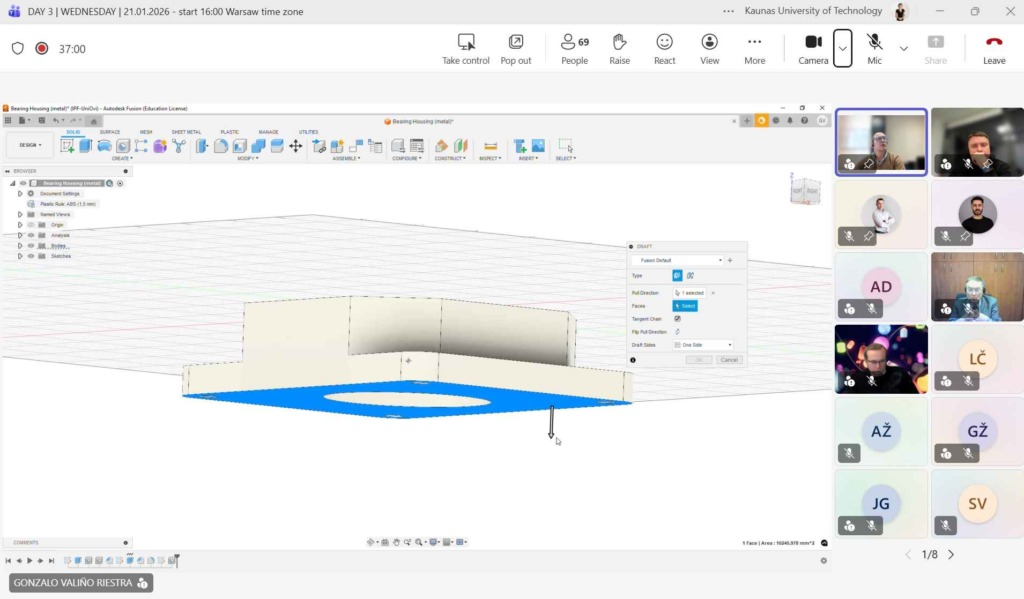
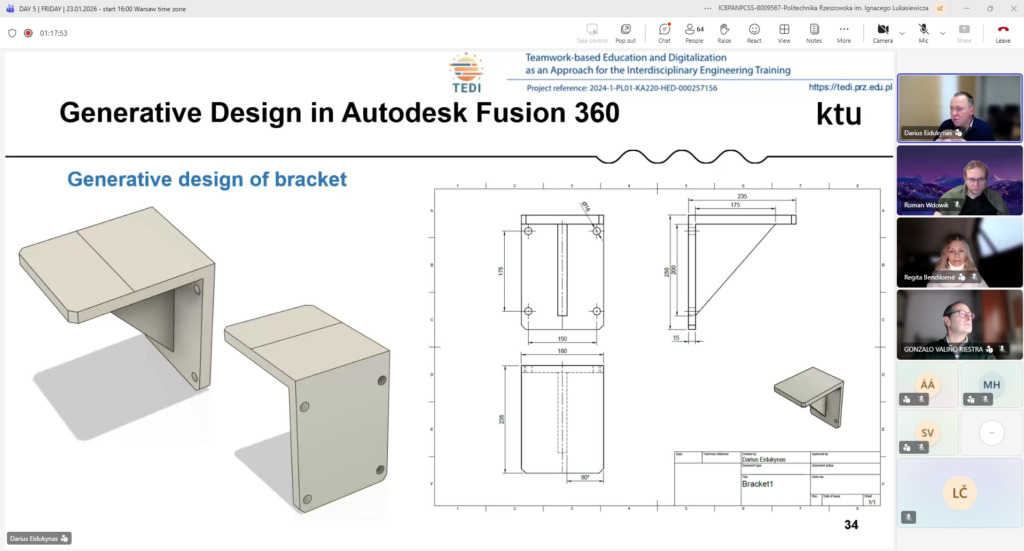
During the intensive training week, participants followed a carefully planned program that combined theoretical knowledge with practical, activity-oriented tasks. The training focused on CAD-based product development processes, the application of CAE and the finite element method (FEM) for structural analysis and optimization, as well as material selection and evaluation of their performance characteristics.
By completing guided tasks and solving real-world design challenges, students deepened their understanding of how modern software tools help make engineering decisions, ensure product durability, and drive innovation in the fields of mechanical, materials, and civil engineering.
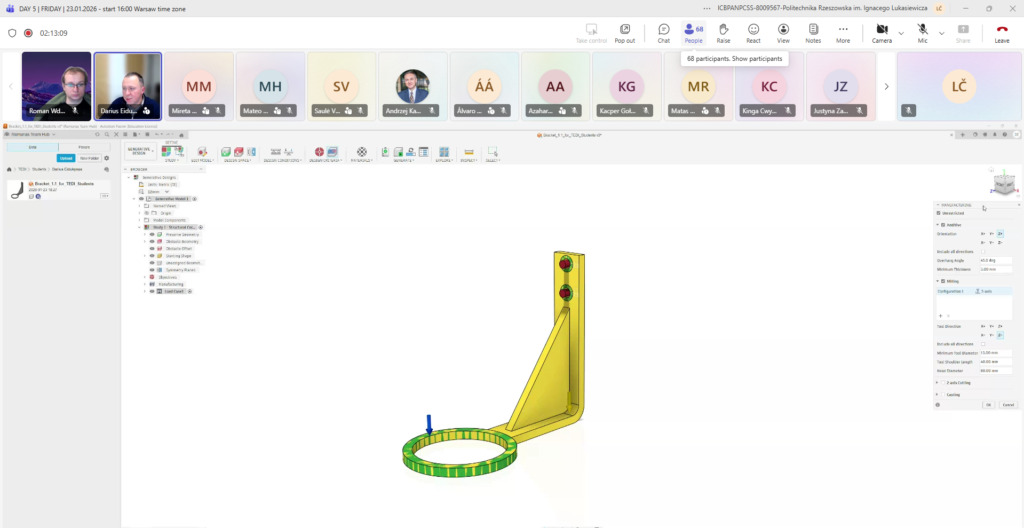
Feedback from participants shows that the TEDI pilot training was valuable from both an academic and practical perspective. The training provided an opportunity to deepen knowledge of modern product development processes, finite element analysis, generative design, and the application of advanced software tools in engineering.
In their feedback, students particularly highlighted generative design and its future potential, as well as the opportunity to directly apply the skills they had acquired in their studies, final projects, and future professional activities.
Although some theoretical topics, such as FEM, required more preparation and knowledge of mathematics and physics, they contributed to a deeper understanding of engineering solutions and digital simulations, and the training reinforced the interdisciplinary approach and the participants’ readiness to work with modern engineering technologies.
Michael Tannoury: “I learned more about finite element analysis and generative design. These are interesting topics with great potential. I gained new CAD skills working with Fusion, especially in the field of simulation.”

Aistė Griciūtė: “The knowledge I gained can be directly applied to my final project. CAD modeling, FEM analysis, and material selection methods will help me perform structural analysis in my research, helping me achieve more efficient and reliable results.”
Gabrielė Žinkaitė: “The most useful topic was generative product design, as it is likely to become very important in the near future for creating optimized and effective engineering solutions.”

Kristupa Šeškauskaitė: “Although the theoretical part of FEM required a deeper understanding of mathematical concepts and physical principles, it was a really interesting topic because it helped me better understand how simulations actually work in software tools.”

Modestas Čepauskas: “Using Autodesk Fusion, I learned how artificial intelligence algorithms can generate optimized design options based on defined constraints and performance criteria. This method allows engineers to find creative, effective solutions that would be difficult to create manually and demonstrates the potential of generative design in modern product development.”